A skylight is one of those unique features that can make an entire room feel brighter and more open, especially through the dark, rainy months when every bit of daylight counts. So when a brown ring shows up on the drywall beside it, or a few drops land on the floor below, it’s hard not to look straight up at the glass and assume you already know what’s to blame.
But the water you’re seeing may have started somewhere other than the skylight. Before you spend money on a fix, you’ll want to know whether you’re dealing with a true skylight leak or a problem with the roof around it. Let’s walk through how to tell the difference.
How to Tell Whether Your Skylight or Roof Is Causing a Leak
Where the water appears, and what it looks like when it gets there, will give you the earliest clues about its source. As a starting point, here’s what you can look for to determine whether the leak is coming from your skylight or the roof itself:
Signs the Skylight Itself May Be Leaking
When your skylight unit is the source, the evidence is typically going to be on the skylight itself. Look closely at the glass or dome for cracks, then check where the glazing meets the frame for gaps or seals that have pulled away. During the next heavy rain, watch the inside edges of the frame. Water that beads up or drips directly from the frame, with the drywall above it still dry, indicates a potential problem in the unit rather than the roof.
If it’s an older acrylic dome, those can also turn brittle over time and develop hairline cracks that are hard to spot from below.
Signs of a Roof Leak Around the Skylight
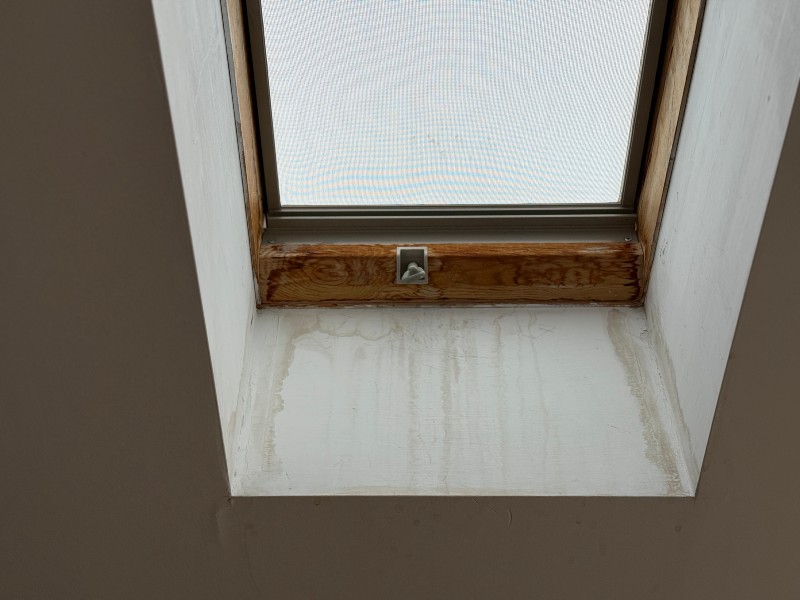
Water from a roof leak tends to travel unnoticed before it actually appears in your sight, so the evidence may show up around the skylight rather than on it. You might see stains spreading down the walls of the light shaft from the top, or even notice some paint bubbling and peeling where the shaft meets the ceiling.
If you can get into the attic, look for streaks trailing along the rafters toward the opening or damp, darkened insulation beside it. If this is what you see, you can very likely rule out the skylight; that water damage can generally be traced back to the flashing or roofing outside.
Common Causes of Roof Leaks Around Skylights
Most leaks around a skylight involve something wrong with its flashing, those metal pieces fitted around the opening to direct water off the roof and past the skylight. Here’s what usually lets water through:
Aging Flashing and Sealants
Flashing is exposed to every rainstorm and temperature swing, so metal can eventually rust or corrode, and the sealant along its edges can dry out and crack. Once any gaps form, water can slip underneath and run toward the opening. Since the skylight itself may still be in good shape, a skylight flashing repair can often stop the leak by replacing the worn pieces with new, properly fitted flashing and resealing the edges.
Improper Skylight Installation
Skylight flashing is engineered to match the unit’s mount and the type of roof it sits on, with each piece layered to shed water onto the next. When an installer uses a kit that doesn’t suit the roof or leans on caulk to cover gaps the flashing should have handled, the opening may stay dry for a few seasons. But caulk breaks down, and a leak will likely occur once it does, sometimes years after the work was finished.
Storm Damage and Weather Exposure
Strong gusts of wind can lift the shingles around a skylight or loosen a section of flashing, and a falling branch can crack the glass or bend the metal. Here in the Pacific Northwest, fir needles and moss also collect on the uphill side of a skylight, where they hold water against the flashing instead of letting it drain. Through a long stretch of rain, that trapped water can work its way under the shingles and into the shaft.
General Roof Deterioration
Sometimes the skylight and its flashing are fine, and the leak can be found farther up the roof. Cracked or missing shingles, worn underlayment, or a damaged vent boot can let water in above the skylight. From there, it’ll run down the roof deck and drip out at the first opening it reaches, which is often the skylight shaft. Patching around the skylight won’t stop that kind of leak, so leaky roof repairs in these cases need to target the actual point of entry.
When Condensation Is Mistaken for a Skylight Leak
Condensation typically appears on cold mornings, especially in kitchens and bathrooms, and will cause humidity once the day warms up. That humid air will then rise, meet the cold glass, and turn back into water.
Instead of trailing from one spot the way a leak does, it’ll usually spread evenly across the glass or frame. If you can wipe the moisture away from the room side, you’re looking at condensation. Fog trapped between the panes is a different matter: the glass unit’s seal has failed, and no roofing repair will clear it.
How a Professional Roof Inspection Helps Identify the Source
To truly find the source of the leak, the water has to be followed backward from where it appeared. And here at Gresham Roofing, every roof inspection we perform covers the shingles, flashing, vents, chimney, and skylight seals, along with the gutters and the ventilation in your attic. Plus, we’ll look for any signs of water intrusion or mold inside your home.
Our team has the experience to trace the stain back to where the water actually got in and assess any damage it has caused along the way. That way, before anyone prices out a leaking skylight repair, you’ll know exactly what needs fixing and what doesn’t.
Let Gresham Roofing Find Where the Water Is Getting In
A stain beside your skylight can come from the glass, the flashing, or a spot on the roof well above it, and each one needs a different fix. As a third-generation, family-owned company providing residential roofing services across Gresham and the Portland metro since 1968, we’ll diagnose the leak first and then give you an honest, transparent proposal for the repair your roof needs. Our crews are trained in every aspect of roofing, so the work will be done right the first time.
If water is showing up around your skylight, let’s track down where it’s coming from together. Contact us today to schedule your inspection.
Skylight and Roof Leaks – Frequently Asked Questions
Does Condensation Mean My Skylight Is Leaking?
Not necessarily. Condensation forms when warm, humid indoor air hits the cold glass, so it’s a moisture issue inside your home rather than a roofing problem. Running your kitchen and bathroom fans and keeping indoor humidity under 50% will usually cut it down. If drops keep showing up during rainstorms, though, it’s time to have the roof checked.
Can a Leaking Skylight Cause Water Damage to My Home?
It certainly can. Even a slow drip can soak the insulation above your ceiling, stain the drywall, and rot the wood framing around the skylight shaft over time. Wet materials can also grow mold if they aren’t dried within 24 to 48 hours, so the sooner the source is found, the less of your home will need repair.
Should I Replace My Skylight When I Replace My Roof?
In many cases, yes, especially if the skylight is older or showing signs of wear. The roofing around the opening is already off during a replacement, so swapping the unit and its flashing at the same time is simple. Waiting could mean cutting into your brand-new roof later to replace a skylight that failed on its own.
How Often Should I Schedule a Roof Inspection for Leaks?
We recommend scheduling a roof inspection at least once a year, plus a check after heavy storms or strong winds. Roofs that are ten or more years old deserve a little extra attention, too. And if you notice stains, drips, or sagging around your skylight, there’s no need to wait for your annual visit.