Your air conditioner is not always the reason your cooling bills are higher than they should be. Sometimes the problem is an attic that is trapping heat and pushing it downward into your living space. Proper roof ventilation in Gresham, OR, addresses that problem, and the energy savings that come with it are something homeowners often underestimate.
Gresham Roofing and Construction has been helping property owners understand and improve their roofing systems since 1968. Ventilation is one of the most consequential and most overlooked parts of a well-performing roof. Here is a clear look at how it works and what it can do for your energy costs.
What Is Roof Ventilation?
A roof ventilation system is designed to move air through the attic space. It consists of two main components: intake vents positioned low on the roof, usually along the soffits, and exhaust vents located at or near the peak. Cool air enters through the intake, warm air rises and escapes through the exhaust, and the attic maintains a temperature closer to the outdoor air rather than becoming a heat chamber.
Roof Ventilation’s Role in Temperature Control
When an attic is sealed or poorly ventilated, heat builds up and radiates downward through the ceiling into the rooms below. Your HVAC system then works harder and runs longer to compensate, and your energy bill reflects it. A functioning attic ventilation system interrupts that cycle by removing heat before it has a chance to migrate into the living space.
How Heat Builds Up in Your Attic
On a warm day, an unventilated or under-ventilated attic can reach temperatures significantly higher than the outdoor air. The roof absorbs solar radiation throughout the day, and without a way for that heat to escape, it accumulates. Roofing materials also contribute to heat retention depending on their color and composition. By late afternoon, an attic without adequate airflow can become an oven.
How Roof Ventilation Reduces Cooling Costs
When hot air has a proper exit point and cool air has a proper entry point, attic temperatures drop. That drop reduces how much heat transfers through your ceiling into conditioned living space. Your air conditioner no longer has to work against a constantly replenished heat source from above, which means shorter run cycles, less energy consumption, and lower monthly utility costs. The reduction in cooling load also puts less strain on your HVAC equipment, extending its operational life.
Roof Ventilation Benefits Beyond Energy Savings
Energy-efficient roofing begins with ventilation, but the benefits go well beyond the utility bill. A well-ventilated attic also reduces moisture buildup that leads to mold, mildew, and rot. It helps roofing materials last longer by preventing the heat degradation that causes shingles to blister and curl prematurely. In winter, it prevents warm indoor air from condensing against cold roof decking, a process that damages insulation and can contribute to ice dam formation.
Signs Your Home Has Poor Roof Ventilation
Some of the more common indicators of ventilation problems include upper rooms that are noticeably warmer than the rest of the house, unusually high cooling bills without a clear explanation, a musty or stale smell in the attic, visible moisture or staining on attic framing, and shingles that appear to be aging faster than expected. If these sound familiar, your attic ventilation system warrants a professional assessment.
Types of Roof Ventilation Systems
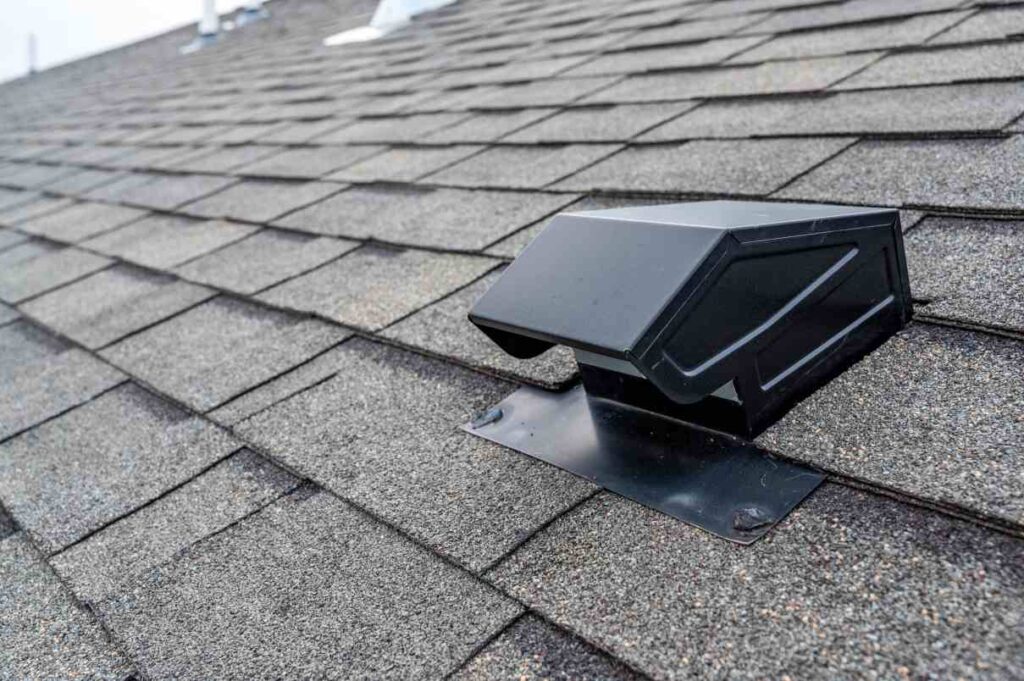
There are several options for improving roof ventilation. Ridge vents run the length of the roof peak and work in tandem with soffit intake vents to create continuous airflow along the full underside of the roof deck. Gable vents are installed at the ends of the attic and can supplement other ventilation. Static vents provide fixed exhaust points without moving parts. Powered attic fans use electricity to actively exhaust hot air and are particularly useful in homes where natural airflow is limited.
How to Optimize Roof Ventilation for Maximum Savings
The most effective attic ventilation system balances intake and exhaust. When intake capacity falls short of exhaust capacity, the system cannot draw in enough replacement air to maintain proper airflow. Insulation that blocks soffit vents is one of the most common problems we find in older homes and is a straightforward fix. Making sure exhaust vents are not obstructed by debris and that all ventilation components are in good condition also keeps the system performing as it should.
When to Upgrade Your Roof Ventilation System
If your roof is more than 15 years old, you have had recurring moisture issues in the attic, upper floors are consistently uncomfortable during warmer months, or you are already planning roofing work, it is an ideal time to evaluate and improve your ventilation. Roof vent installation is most cost-effective when done alongside other roofing projects.
Evaluate Your Roof Ventilation Today
Poor ventilation can lead to costly problems, from premature shingle deterioration to moisture damage in your attic. If you’re unsure whether your current system is doing its job, a professional assessment can help. To improve roof ventilation in your home or get a professional assessment of your current system, contact Gresham Roofing and Construction to request a free estimate.


